Transgender Athletes' Debate Hits the Supreme Court
The National Debate on Transgender Athletes Reaches the Supreme Court
Becky Pepper-Jackson, a transgender girl from West Virginia, has always known she was a girl despite being assigned male at birth. Her journey to self-discovery began in elementary school, long before the national debate over transgender athletes took center stage. The controversy surrounding two transgender high school runners in Connecticut sparked a nationwide conversation about fairness in sports, leading more than half of U.S. states to ban transgender girls from competing on female teams.
West Virginia lawmakers, citing concerns about the physical advantages that transgender athletes might have, enacted a law in 2021 that specifically targeted one transgender girl—Pepper-Jackson—who had not experienced typical male puberty. Her legal team argues that this law is based on flawed assumptions and lacks a solid foundation in reality.
A Legal Battle with National Implications
The case has now reached the U.S. Supreme Court, where it will be argued on January 13. Pepper-Jackson’s lawyers claim there is a significant disconnect between the law’s intended purpose and its actual impact. They argue that the law only affects one individual and does not address the broader concerns that lawmakers claim to be addressing.
This case is part of a larger national issue involving transgender athletes. Alongside Pepper-Jackson’s challenge, another student from Idaho is also contesting a state law that bans transgender girls from participating in female sports. These cases are among the most significant the Supreme Court will decide this year, drawing attention from politicians and the public alike.
Political Stakes and Public Opinion
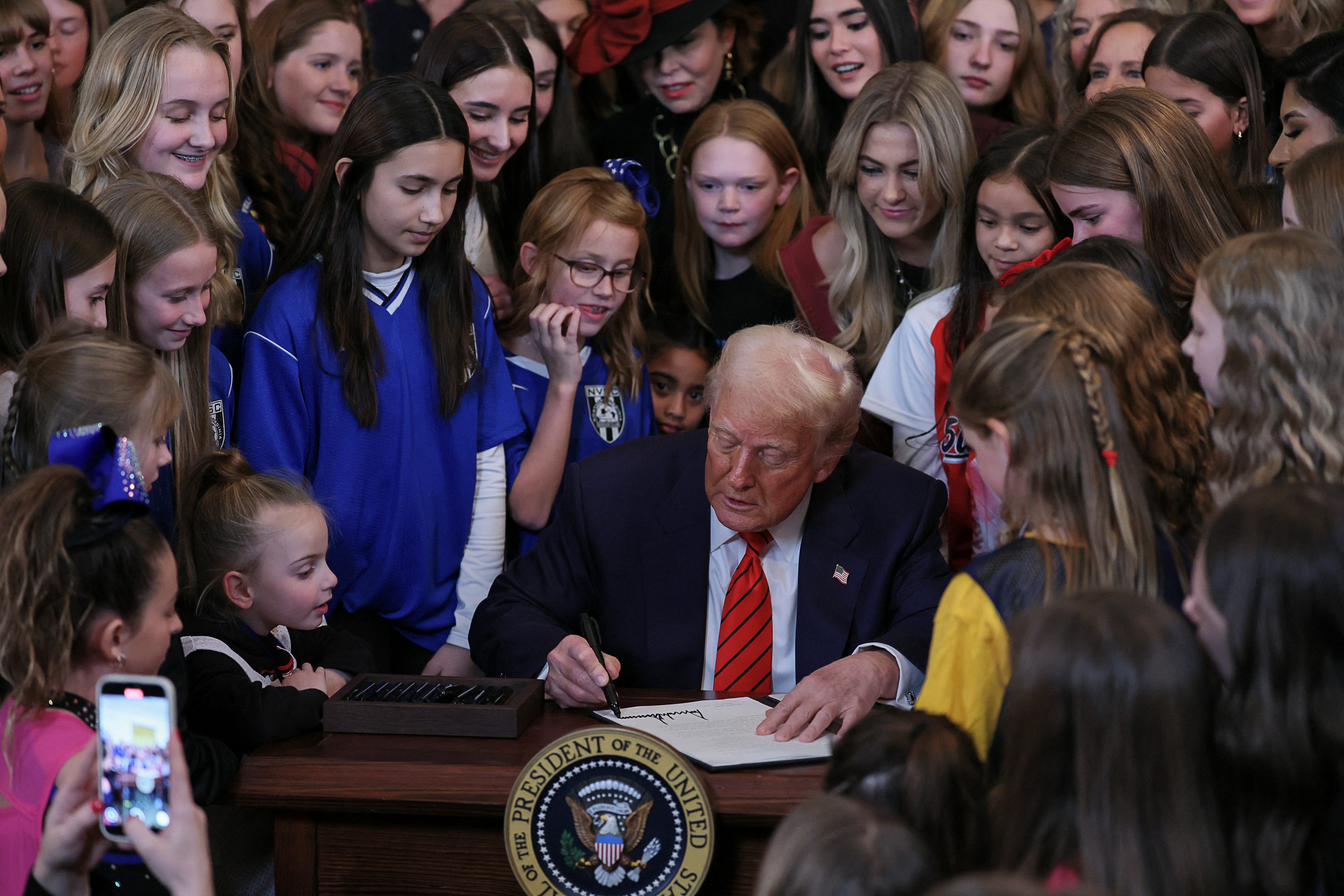
Former President Donald Trump has been vocal in his opposition to transgender women competing in female sports, making it a central point in his 2024 campaign. He has criticized such policies as demeaning to women and has called for federal funding to be cut from schools that allow transgender athletes to compete on female teams.
In a recent speech to House Republicans, Trump mocked transgender athletes, calling the issue “ridiculous.” His stance has resonated with many Republicans, who see it as a key issue in the upcoming midterm elections.

The Justice Department has received permission from the Supreme Court to support West Virginia and Idaho in defending their laws during the oral arguments. This shows the political weight of the issue, as well as the legal complexity involved.
A Transgender Athlete's Decision to Withdraw
Lindsay Hecox, a transgender student at Boise State University, initially challenged Idaho’s law, but she has since decided to drop her case. In September, she stated that she no longer plays sports and fears harassment if the lawsuit continues. Hecox claims she has faced negative public scrutiny and increased intolerance toward transgender individuals, particularly those who participate in sports.
Idaho’s attorney general, however, argues that it is too late for Hecox to withdraw from the case. The court has not yet ruled on her request and will consider it after the oral arguments.
A History of Legal Victories for Transgender Rights
Despite the challenges, transgender rights advocates remain hopeful. Their efforts were bolstered by a 2020 Supreme Court decision that expanded protections under the Civil Rights Act of 1964. The court ruled that workplace discrimination based on sexual orientation or gender identity is illegal, setting a precedent that could influence current cases.
Pepper-Jackson’s legal team argues that the same reasoning should apply to Title IX, which prohibits sex discrimination in educational programs. However, West Virginia contends that biological differences are crucial to maintaining fairness in athletic competition.
“The whole thing is ridiculous... and it’s so demeaning to women,” Trump said during a recent speech. His comments reflect a broader sentiment among some lawmakers and citizens who believe that allowing transgender athletes to compete on female teams undermines the integrity of women’s sports.
The Role of Science and Policy in the Debate
Lawyers for the transgender students argue that lower courts did not have the opportunity to fully examine the scientific evidence regarding potential physical advantages. They claim that the cases were appealed too quickly, preventing a thorough evaluation of the facts.
Idaho and West Virginia maintain that elected legislators, not judges, should determine the evidence in such cases. This argument mirrors the Supreme Court’s decision last year, when it allowed states to handle the complex debates around gender-affirming care for minors.
Experts like David Super, a professor at Georgetown University Law Center, suggest that the Supreme Court may need to revisit the issue of whether there is evidence of unfair advantage. On the other hand, Kate Redburn, an expert on trans rights at Columbia Law School, believes the students face an uphill battle given the current composition of the court.
Lower Courts Side with Transgender Students
At earlier stages of the litigation, lower courts have sided with the transgender students, ruling they were exempt from the bans as the challenges continued. A federal judge in Idaho found that Hecox likely did not have a physical advantage, but a trial would be necessary to fully assess the scientific evidence.
Hecox, who takes cross-sex hormones, claims her testosterone levels are typical of non-transgender women, and her muscle mass and size have decreased. Before retiring from sports this school year, she played soccer and ran on club teams, which she described as “no-cut” sports.
Pepper-Jackson, who has lived publicly as a girl since the fourth grade, takes puberty-delaying medication and estrogen. Despite this, West Virginia argues she retained a physical advantage that helped her place third in a state discus throwing competition and eighth in shot put.
Pepper-Jackson attributes her success to hard work and practice, stating her performance is “well within the range” of non-transgender girls her age. She also emphasizes that the case is not just about sports but is part of a broader effort to exclude transgender people from public life.
Voices from Non-Transgender Athletes
The court has also heard from non-transgender athletes who feel their opportunities have been affected. Selina Soule, a former high school track athlete in Connecticut, claimed she missed qualifying for a race while biologically male competitors made the cut. She argued that her effort and competitive strength were undermined by natural physiological advantages.
Andraya Yearwood, one of the transgender athletes involved in the original Connecticut case, responded that her “moderate success” was exaggerated by the media, fueling bans like those in Idaho and West Virginia. She emphasized that competing on the track team gave her confidence and purpose.

“Respectfully,” her attorneys wrote, “Ms. Yearwood asks the Court to preserve that opportunity for other transgender girls.”
As the Supreme Court prepares to hear arguments, the debate over transgender athletes remains a deeply divisive and complex issue, with far-reaching implications for sports, policy, and civil rights.

Post a Comment for "Transgender Athletes' Debate Hits the Supreme Court"
Terima Kasih Telah Berkomentar dengan sopan!