The Rise of Rail in Hawaii: A Decades-Long Journey
A Long and Winding Road to Completion
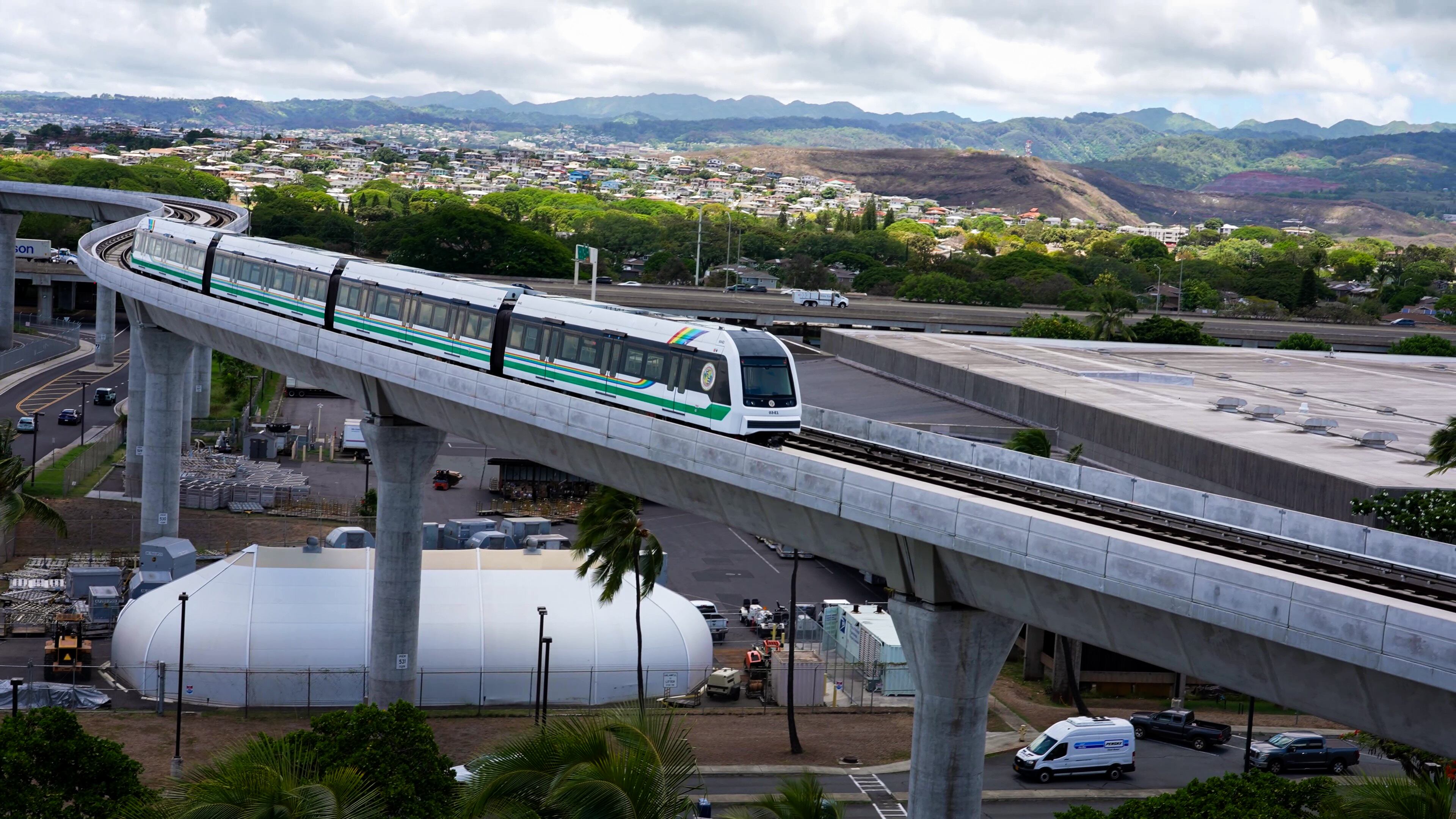
HONOLULU – As the city prepares to open the second segment of its rail system this week, from Halawa to Middle Street, the journey that brought us here is one marked by decades of debate, setbacks, and perseverance.
Decades of Disagreement
The idea of a rail system to ease Oahu’s traffic congestion first emerged in 1968 when Neal Blaisdell was mayor. His successor, Frank Fasi, took up the cause a year later, proposing a 29-mile rail line from Hawaii Kai to Pearl City. However, Fasi lost his re-election bid in 1980, and new Mayor Eileen Anderson canceled all rail plans shortly after. She cited concerns over projected ridership numbers not materializing.
When Fasi returned to office in 1984, he revived the rail initiative. By 1990, federal funding had been promised for a 17-mile system. The city sought a 0.5% general excise tax surcharge to fund local contributions. Public support was mixed, but it seemed like a sure thing at Honolulu Hale. That changed in 1992 when Council member Rene Mansho, once a rail supporter, switched sides during a critical vote on the surcharge, blocking the project. She argued the Fasi administration hadn’t proven the project was financially viable.
Fasi’s successor, Jeremy Harris, focused on bus rapid transit before leaving office in 2004. Shortly after, Mayor Mufi Hannemann scrapped the rail plan. But with state legislation allowing counties to impose a GET surcharge for public transportation, Hannemann secured funding for rail projects. The 4% GET increased to 4.5%, set to expire in 2030. He pledged not to waste taxpayers’ money.
Shifting Focus and Rising Costs
Congressman Daniel Inouye, a longtime Hawaii senator, became a key advocate for the rail system. Despite this, the project faced years of back-and-forth over route selection and system design. In 2008, voters approved steel-on-steel rail, and two years later, they created the Honolulu Authority for Rapid Transportation (HART).
The project soon faced ballooning costs. Groundbreaking occurred in 2011 for a $4 billion project, but work was paused for over a year due to a federal lawsuit over Native Hawaiian burial sites. Former Gov. Ben Cayetano ran for mayor in 2012, vowing to cancel the project if elected. “This is the most mismanaged project I’ve ever seen in my 28 years in public office,” he said. However, he lost to rail supporter Kirk Caldwell.
Over the next few years, the project struggled with rising costs, public distrust, leadership changes, and funding shortfalls. The Federal Transit Administration withheld federal funds, forcing HART to develop several recovery plans. In 2020, the agency canceled a public-private partnership for the City Center section because bids exceeded affordability limits by about $1.3 billion.
Major Cuts and New Beginnings
With the challenge of funding now resting with Honolulu’s next mayor, Rick Blangiardi, significant changes were made. He secured federal approval to shorten the rail line by a mile and a half, ending in Kakaako instead of Ala Moana. The city also abandoned a $330 million park-and-ride structure at Pearl Highlands to keep the total cost under $10 billion.
“Our intent was to say how much money do we have and how far can we possibly take this?” said Blangiardi.
In the summer of 2023, half a century after the initial discussions, the first rail segment opened from Kapolei to Halawa. While ridership was initially low, the service was running smoothly, and regulars appreciated the convenience. This week, the second segment will extend from Halawa to Middle Street, with stops at Pearl Harbor and the airport, and express buses connecting to the University of Hawaii at Manoa and Waikiki.
The Future of the Rail System
Hawaii’s largest-ever public works project now includes 16 miles of track and 13 completed stations. Work continues on the next segment, called City Center, which will add three more miles of track and six more stations. The target date for its opening is 2031.
The rail system has come a long way from its early days of controversy and uncertainty, but its completion marks a major milestone for Oahu’s transportation future.

Post a Comment for "The Rise of Rail in Hawaii: A Decades-Long Journey"
Terima Kasih Telah Berkomentar dengan sopan!