Liberty Festival Honors Disabled Artists in London
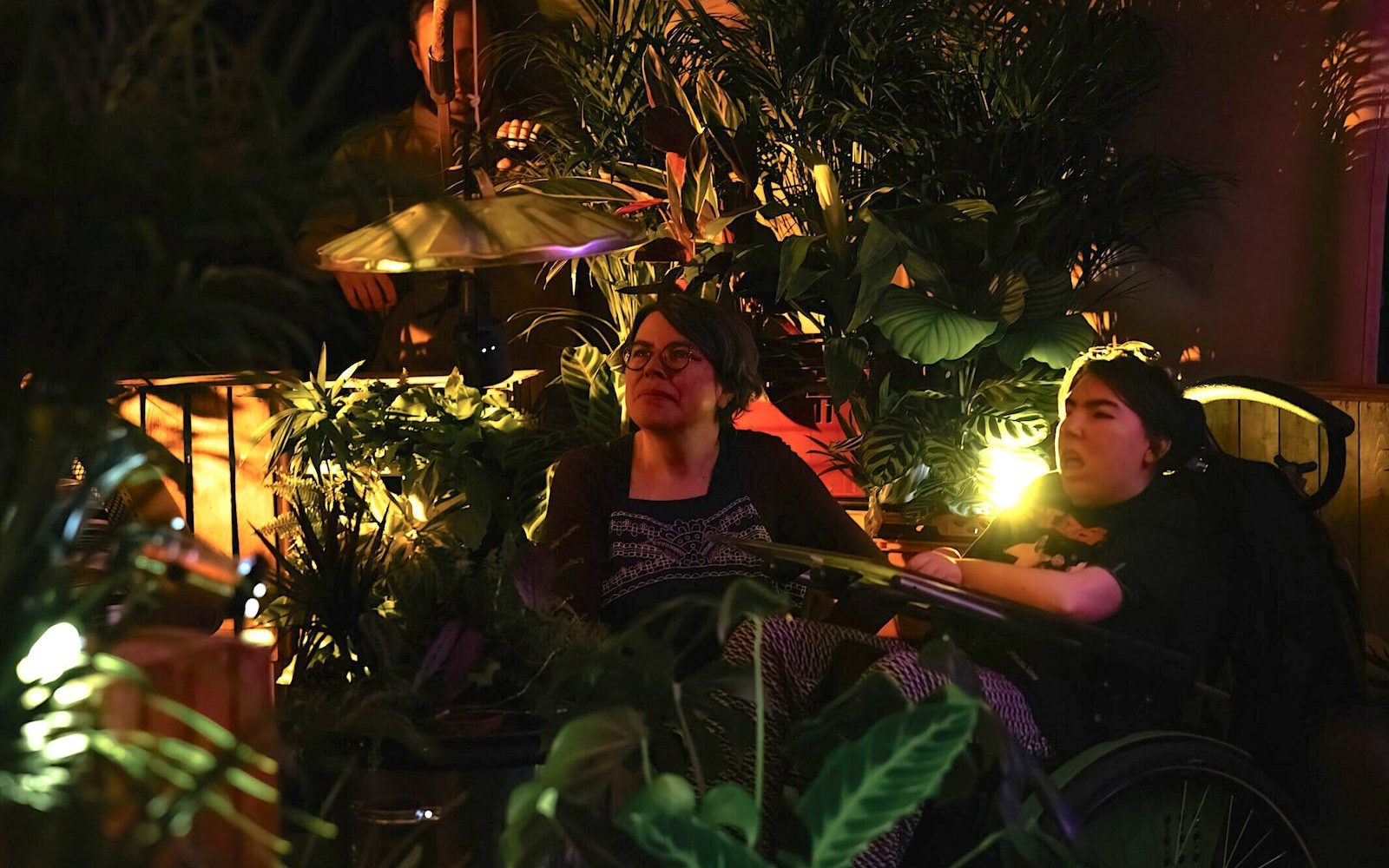
A Journey of Resilience and Artistic Expression
Kristina Veasey, now 52, recalls the mid-1990s as a time when disability protections and accessibility were virtually non-existent. At just 21 years old, she was advised by the Department of Work and Pensions to sign up for benefits. This advice came at a time when her life was already shaped by Ehlers-Danlos syndrome (EDS), a group of inherited disorders that affect connective tissues such as skin and muscles. Despite these challenges, Kristina found solace in creating art and participating in wheelchair sports.
Her passion led her to represent ParalympicsGB in wheelchair basketball at the 2000 Sydney and 2004 Athens Games. However, EDS took a toll on her health, along with other conditions like POTS, which causes an elevated heart rate after even minor activities. Struggling to maintain a regular job, her friends suggested a new path: making art her career.
Today, Kristina is headlining the Battersea Arts Centre for the Liberty Festival, a leading disability arts and culture program organized by the Mayor of London. The festival runs until Sunday and is part of Wandsworth’s tenure as the London Borough of Culture. Alongside Brazilian artist Alejandro Ahmed, she created "Capturing the Forest," an installation designed for people who cannot access nature—herself included.
“I don’t think people really understand what it’s like to live with constant pain and a dysfunctional nervous system,” Kristina says. “It’s a constant battle juggling multiple symptoms of a failing body, and it’s exhausting. Simple things like washing my hair or responding to emails can leave me nauseous, dizzy, or with severe neck pain.”
More than 16.1 million people in the UK have a disability, representing roughly one-quarter of working-age adults and 45% of pensioners. Yet, three out of four disabled people have experienced ableism in the last five years, according to a survey by the charity Scope. Many face judgment, with some accused of faking their conditions or being told they are not capable of certain tasks.
Vicki Hawkins, a neurodiverse dancer and choreographer with the BLINK Theatre Company, knows this struggle firsthand. She emphasizes that her disability is just one component of her identity, like having brown hair or liking football. However, venues often claim they would have booked her company but say another “like them” is already scheduled. What this means is that another company with a disabled person in their cast is already booked.
Disabled performers and theatre-goers have long feared being overlooked by venues, which often lack essential accessibility features such as wheelchair access, changing rooms, audio description, online streams, or relaxed performances where audiences can make noise.
Aggie Dolan, inclusion manager at the Battersea Arts Centre, explains that throughout history, disability has been seen as something wrong with the individual. As a result, many institutions, including arts spaces, have not been built with disabled people in mind.
Ellie Griffiths, artistic director of Oily Cart, creates sensory theatre for children with disabilities. One reason for this focus is to encourage young people to embrace theatre as they grow older. If someone feels excluded from theatre due to language barriers or feeling unintelligent, they may not want to spend money on shows in the future.
“Working towards a future where every show considers people with the most barriers to access first in the creative process is our goal,” Ellie says. “Then, we can move towards a theatre that is more responsive and flexible, ultimately working for more people.”
Jamie Hale, artistic director of CRIPTIC ARTS, shares a similar vision. They believe audiences should feel encouraged to attend work by disabled people, as it is exceptional and speaks to everyone. “Have the courage to go and remember that disabled people are just people making art,” Jamie says. “There’s exceptional stuff out there that isn’t going to be seen unless audiences come and see it.”
One reason non-disabled people should book tickets is to show they care about disabled people during a time when benefit cuts are putting them at risk. The government still intends to slash certain welfare payments, including those relied upon by disabled people. Without these supports, campaigners warn that 150,000 people, mainly sick and disabled individuals, could be pushed into poverty by 2026.
Access to Work, a grant that helps support disabled people in the workplace, was recently slashed. For Kristina, this feels like a step back to the 1990s when she left university and had no access to support. Still, she remains optimistic about the future of disability art in the UK, though challenges will persist unless allies speak out.
“I might make a new artwork about it,” Kristina says, “but unless I get my Access to Work fully reinstated, I doubt you’ll ever get to see it.”

Post a Comment for "Liberty Festival Honors Disabled Artists in London"
Terima Kasih Telah Berkomentar dengan sopan!