How IFS Says Rachel Reeves Can Boost Taxes Without Breaking Promises
Rachel Reeves' Tax Conundrum
The Chancellor is facing a significant challenge in the upcoming Autumn Budget, as she may need to find up to £30 billion in tax rises or spending cuts. The Office for Budget Responsibility is expected to downgrade its forecasts for future productivity growth, which means that Rachel Reeves will need to make up the difference to meet her borrowing rules.
Reeves has reaffirmed her commitment to her manifesto pledge of not raising income tax, National Insurance, or VAT—three of the Treasury's biggest revenue raisers. This leaves other taxes at risk of being hiked. However, short-term fixes to existing taxes could do more damage and dent any attempt at economic growth, according to critics.
A leading think tank suggests there is still a way for Reeves to raise tens of billions of pounds more in revenue without breaking Labour's election promises. The Institute for Fiscal Studies (IFS) proposes a reform of the tax system rather than making what it calls 'a half-baked dash for revenue'. We look at its tax proposals and what they could mean for you.
Property Taxes
Economists and commentators have welcomed Conservative leader Kemi Badenoch's plans to scrap stamp duty on main homes if elected in 2029. While it is very unlikely we'll hear something similar next month, the IFS says property taxation is in desperate need of reform.
The think tank warns against any attempt at increasing stamp duty rates, which it says would discourage people from moving to take up new jobs. It also states that while council tax is in dire need of reform, increasing rates on more expensive properties would only boost local authorities rather than the Treasury.
The IFS estimates that Reeves could raise £4.4 billion if she introduced a new council tax surcharge that acts to double council tax rates on the top two bands. However, it proposes an overhaul of the system, with stamp duty and the current council tax system abolished in favour of reformed council tax bands that are in line with updated property values. The current council tax system is based on property prices from 1991.

Inheritance Tax
Inheritance tax is widely reviled, particularly as changes announced last year mean pensions will be included in people's estates for IHT purposes from April 2027. Reeves could raise the headline 40 per cent rate by 1 percentage point, to raise £0.3 billion, or reduce the threshold at which people have to start paying the tax, which would mean more estates would be dragged into the net.
Currently, individuals can pass on up to £325,000 of their wealth tax-free, with an additional £175,000 tax-free allowance if they're passing on a primary residence to children or grandchildren—an allowance known as the residence nil-rate band. Couples can double this, and potentially pass on up to £1 million tax-free.
Abolishing the residence nil-rate band could raise £6 billion, according to the IFS. The Chancellor might also look at changing the gifting rules, extending the seven-year rule, or taxing gifts across people's entire lives.
Pensions
Experts think pensions will be targeted in the next Budget. One option is to slash tax relief for pension contributions. Contributions made into a pension get income tax relief. This means that if you’re a basic-rate taxpayer and put £80 into your pension, it will be topped up to £100 by the taxman. Higher and additional-rate taxpayers need only put £60 and £55 in respectively to get £100.
This takes you back to the position before tax was paid. If the Treasury capped relief at the basic rate of 20 per cent, it could raise as much as £22 billion in 2029-30, but the IFS says this policy would be 'unfair and distortionary' but also extremely difficult to put into place. It could also discourage people from saving into their pension.
Instead, it proposes levying national insurance on employer pension contributions, which escape both employer and employee NICs entirely at the moment. It means employees join salary sacrifice schemes, which reduce salaries in return for employers making NIC-exempt contributions to their pensions. A 1 per cent employer NICs charge on all employer pension contributions could raise up to £1.5 billion in 2029-30.
Reeves may also look at pension lump sum withdrawals, up to 25 per cent of the pot. The IFS suggests replacing it with a taxable cash top-up on pension withdrawals.
Capital Gains Tax
There have been repeated calls for an annual wealth tax, but the IFS says this would have 'huge practical challenges' and Reeves has also ruled it out. The think tank says a wealth tax would penalise saving and incentivise some of the very wealthy to leave the UK entirely.
If the Chancellor wants to raise more from the wealthy, the IFS says it would be better to fix the existing wealth-related taxes, including capital gains tax. This is the tax people pay when they sell certain assets, such as second properties and stocks and shares, and make a profit.
HMRC estimates that a 1 percentage point increase in the higher rate of CGT could generate revenues by around £30 million in 2029-30, while a 10 percentage point increase would reduce revenue by about £3.7 billion. "Any increase in taxes on returns to capital... would do more economic damage than is necessary."
However, the IFS says any increase in taxes on returns to capital, like CGT, dividend and interest income or self-employment profits, without reform 'would do more economic damage than is necessary.' Its chief proposal is that the tax is changed so that there are full deductions for any amounts of money saved or invested. It would also include being 'more generous in the treatment of losses and removing the forgiveness of capital gains tax at death.'
With a reformed tax base in place, tax rates could be increased with little concern about weakening incentives to invest and take risks. This kind of wholesale reform of CGT is, however, very unlikely in the Autumn Budget.
Corporation Tax
Corporation tax made up 2.4 per cent of the national income in the 2010s and it is expected to reach 3.3 per cent in the current tax year. Raising the main rate by 1 percentage point to 26 per cent could raise around £4.1 billion in 2029-30, according to the IFS, but it risks disincentivising investment into the UK and therefore reducing its yield.
Labour has said it will not raise corporation tax or change any of the associated reliefs, but there are plans to shift some business rates from small retail properties to large ones. However, the IFS says that a land value tax for commercial property would be a better idea. The government has kept a bank levy and bank surcharge 'under review', which could raise £2.4 billion.
Income Tax and NICs Still Biggest Revenue Raisers
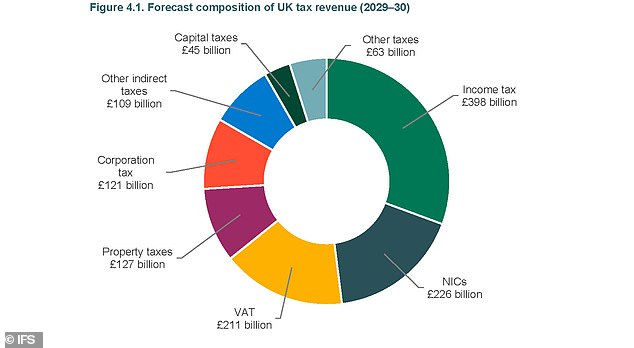
The IFS says that while there are ways to raise tax revenues without the 'big three'—income tax, NICs and VAT—it doesn't mean it would be sensible. These taxes have the largest tax bases, meaning that if the Chancellor wants to raise meaningful sums and avoid tinkering with smaller taxes, she may need to break her previous pledges.
'Many of the tax-raising options outside the 'big three' would have particularly damaging effects on growth and welfare,' it says. Raising all income tax rates by 1 percentage point would raise an estimated £10.9 billion a year by 2029-30, but risks discouraging saving in taxed forms, like investing in companies or property.
The same increase in NICs and VAT would yield £8.5 billion and £9.9 billion respectively, but raising NICs would see people shift how they take income, while changes to VAT would distort buying zero and reduced rate goods. Reeves could choose to extend the freeze on income tax rates, but the IFS says this is 'highly unsatisfactory'.
One way Reeves could raise taxes meaningfully and technically keep her election promise is by introducing a new tax on income, according to the think tank. A 'defence and security levy' or 'national health charge' could effectively increase income tax or NICs, but it risks complicating the tax system further.

Post a Comment for "How IFS Says Rachel Reeves Can Boost Taxes Without Breaking Promises"
Terima Kasih Telah Berkomentar dengan sopan!