Albanese's Bold Super Tax Overhaul Unveiled
Major Overhaul of Superannuation Tax Plan
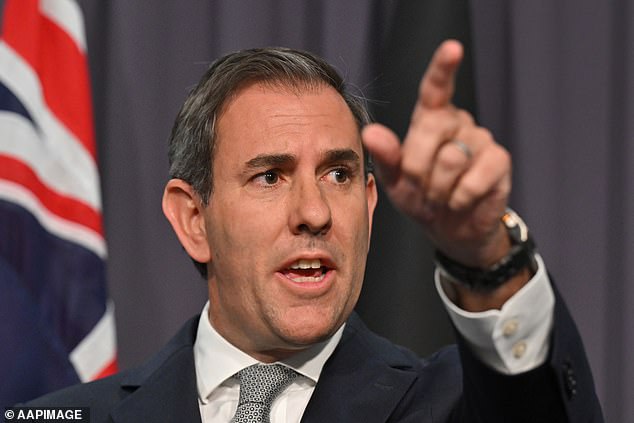
Treasurer Jim Chalmers has introduced a significant revision to the Labor government's superannuation tax plan, responding to widespread concerns that the initial proposal could penalize ordinary Australians with growing retirement savings. The new measures aim to address criticisms from retirees and other stakeholders while maintaining the core objectives of the policy.
The revised plan includes several key changes. The tax on earnings from super balances exceeding $3 million will now be indexed to inflation, ensuring that the threshold adjusts over time rather than capturing more individuals as wages and prices rise. Additionally, the tax will no longer apply to unrealised gains—gains that exist only on paper and have not been sold. This change is expected to alleviate concerns from accountants and retirees who feared unfair treatment of those with assets in self-managed super funds, such as farms and businesses.
Despite these adjustments, the government has increased the tax rate for earnings on super balances above $10 million to 40 per cent, while balances between $3 million and $10 million will still be taxed at 30 per cent. Individuals with super balances below $3 million will continue to pay the standard 15 per cent rate.
The government estimates that the $3 million threshold will affect around 90,000 super balances, while the $10 million threshold will capture approximately 8,000. These figures highlight the targeted nature of the policy, which aims to focus on high-income earners while minimizing the impact on the broader population.
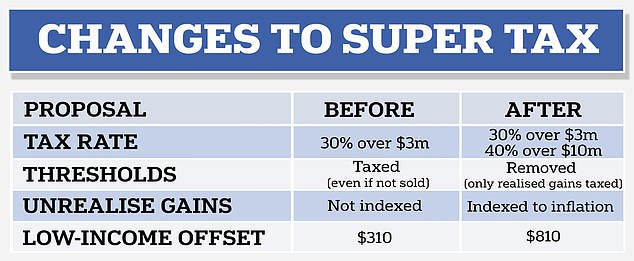
Key Changes in the Super Tax Plan
| Proposal | Before | After |
|---|---|---|
| Thresholds | 30 per cent over $3m | 30 per cent $3m-$10m, 40 per cent above $10m |
| Unrealised gains | Taxed (even if not sold) | Removed - only realised gains taxed |
| Indexation | Not indexed | Indexed to inflation |
| Low-income offset | $310 | $818 |
The government has also decided to eliminate the taxation of unrealised gains, a move that had previously sparked strong opposition from various groups. This adjustment is seen as a step towards making the superannuation system fairer.
Dr. Chalmers emphasized that the changes would make the super system more equitable, stating, "As treasurer and as a government we always try to take feedback seriously." He added that the new approach allows for a more sustainable and targeted tax arrangement.
Additional Reforms and Future Implications
In addition to the tax changes, the government plans to increase the low-income super tax offset payment from $310 to $818, effective from July 2027. The eligibility threshold for this offset will also be raised from $37,000 to $45,000 during the same period.
Although Labor had previously proposed changes to super taxes two years ago, legislation has yet to be introduced into parliament due to opposition from the coalition and the Greens. If passed, the new measures are expected to take effect from July 2026, a year later than the original planned start date.
Dr. Chalmers dismissed claims that the revised plan represents a retreat from the initial proposal, stating, "We found another way to satisfy the same objectives." He noted that the government has been working closely with the prime minister to refine the policy and ensure it aligns with broader goals.
However, the Greens have expressed dissatisfaction with the changes, arguing that they do not go far enough. Nick McKim, the Greens' economic justice spokesperson, criticized the adjustments as a "capitulation to the wealthiest people in the country."



Post a Comment for "Albanese's Bold Super Tax Overhaul Unveiled"
Terima Kasih Telah Berkomentar dengan sopan!